

Ankle instability is a condition in which the ankle joint repeatedly twists, feels weak or gives way while walking, running or performing physical activities. It commonly develops after repeated ankle sprains or injuries that damage the supporting ligaments.Chronic ankle instability can cause persistent discomfort, swelling, reduced balance and difficulty participating in sports or daily activities. If left untreated, repeated ankle injuries may increase the risk of further joint damage.
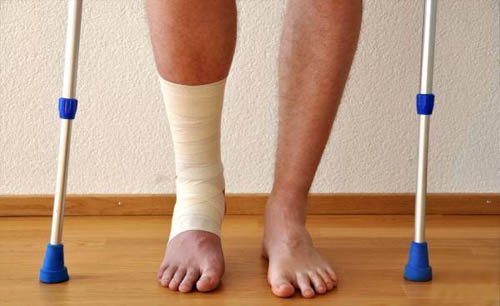
Ankle joint instability occurs when the ligaments supporting the ankle become stretched, weakened or damaged, making it difficult to maintain normal joint stability.
The condition often develops after an ankle sprain that has not healed properly. Some patients experience repeated ankle twisting, while others feel that their ankle may suddenly give way when walking on uneven surfaces.
Chronic ankle instability commonly develops due to repeated ankle sprains, untreated ligament injuries, weak ankle muscles, improper healing, sports injuries and reduced joint support, leading to recurring ankle twisting, pain, swelling and difficulty walking.
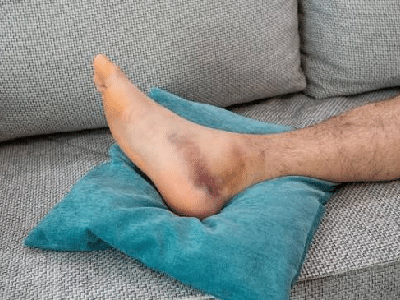
Repeated ankle sprains can stretch or damage the supporting ligaments, reducing their ability to stabilize the ankle.
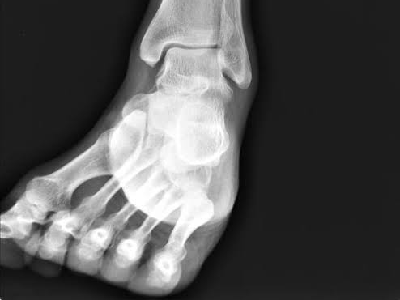
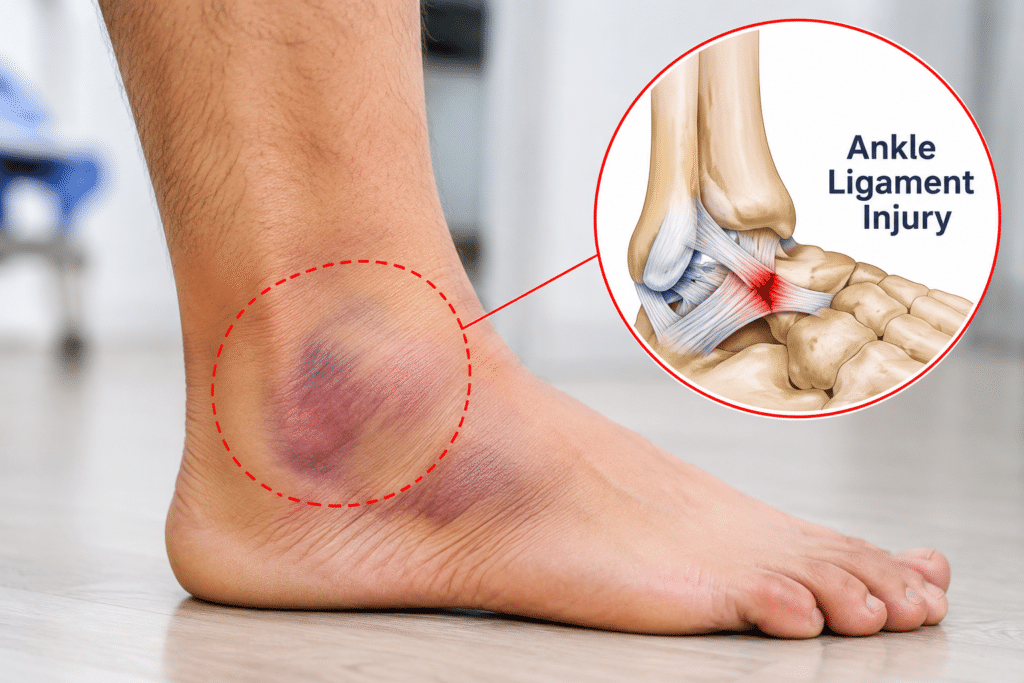
Injuries to the lateral ankle ligaments, particularly the ATFL and CFL, can cause the ankle to become unstable.
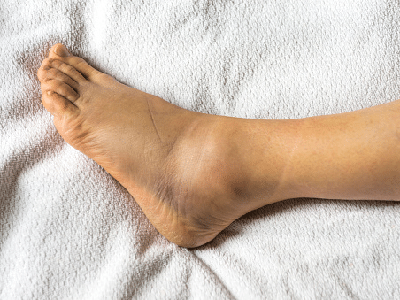
Returning to physical activities before the ankle has recovered completely may increase the risk of repeated sprains and instability.
The ATFL is one of the most commonly injured ligaments during an ankle sprain. Damage to this ligament can contribute to repeated ankle instability.
The CFL helps stabilize the ankle, particularly during side-to-side movements. Injury may contribute to persistent lateral ankle instability.
In some cases, multiple ligaments may be damaged, resulting in greater joint instability and difficulty maintaining normal ankle movement.
Dr. Vishal Yadav is a Foot & Ankle Specialist in Indore who provides evaluation and treatment for ankle injuries, ligament problems, joint instability and complex foot and ankle conditions.
The best treatment depends on the severity of ligament damage and symptoms. Non-surgical options include ankle bracing, physiotherapy and balance training. Surgery may be considered when chronic instability continues despite appropriate conservative treatment.
Yes. Many patients improve with physiotherapy, ankle strengthening exercises, balance training and supportive bracing. Surgery is generally considered when instability persists despite appropriate non-surgical treatment.
Ankle instability surgery may be recommended when repeated ankle sprains, ligament damage and joint instability continue to affect daily activities despite adequate rehabilitation.
An orthopedic surgeon specializing in foot and ankle conditions can evaluate chronic ankle instability and recommend suitable non-surgical or surgical treatment options.
You can consult Dr. Vishal Yadav, Foot & Ankle Specialist in Indore, for evaluation and personalized treatment options for ankle instability and ligament injuries.

Foot & Ankle Specialist · Indore, India
Specialist in foot and ankle conditions, sports injuries, joint preservation and advanced surgical care, with a focus on personalized treatment and improved mobility.
Personalized treatment for foot and ankle conditions, sports injuries and mobility concerns, focused on helping you move comfortably and confidently.

Dr. Vishal Yadav is a Foot & Ankle Specialist in Indore, providing personalized care for foot pain, ankle injuries, fractures, sports injuries, and deformities. With a focus on accurate diagnosis and minimally invasive surgical techniques, our goal is to help patients improve mobility and return to daily activities with confidence.
Medicare Hospital
4/5, Old Palasia, Ravindra Nagar, Indore, Madhya Pradesh 452018
Aarambh Clinic
25 DF scheme no 74 niranjanpur road
near brilliant convention center and Karnataka bank, Indore (M.P.) - 452010